.gif)
.jpg)

.jpg)



.jpeg)


.gif)
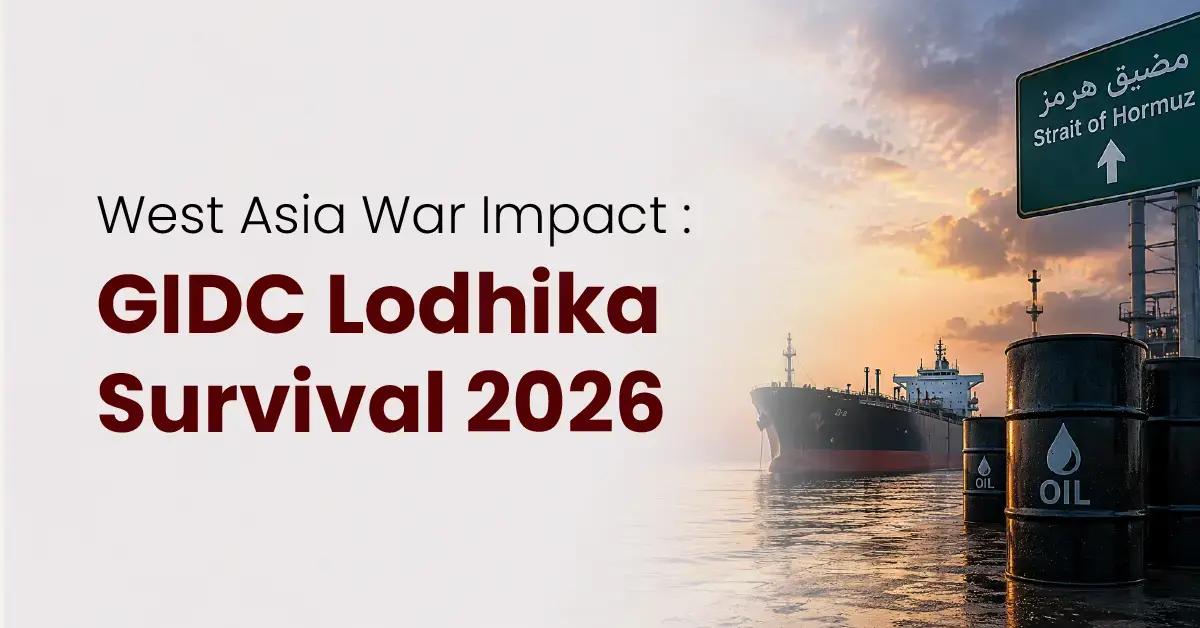
The current situation in West Asia has hit home hard for those of us running units in GIDC Lodhika (Metoda). Since April 2026, the daily grind has changed from focusing on growth to managing a major supply crunch.
The situation where there are many factories in Gujarat operating at less than optimal levels requires a new approach to business. Fortunately, even in this chaotic situation, there are still some industrial areas within Rajkot that are able to survive.
Members of the association can get information regarding industrial zones from the GIDC Lodhika Industrial Association website.
A big hit to the GIDC Lodhika estates has been the 50% cut in industrial gas supply since April 2026. With prices tripling, running a gas-heavy foundry has become a massive money drain. According to the latest Gujarat Government Energy Department notification, industrial gas quotas have been restricted to prioritize essential services during the conflict.
It implies that there is indeed an urge to use Renewable Energy sources. The owners of stores in this area have been very occupied mounting solar panels on their rooftops because of the unpredictability in the cost of fossil fuels. Spinning Mills and Light Engineering Units can work using both solar and grid power; hence, they are not at risk of shortages of fuel like other units.
The engineering units in GIDC Lodhika - especially those making foundries, bearings, and machine tools - are stuck with over ₹750 crore in exports facing delays. With the Strait of Hormuz effectively closed, the usual transshipment through Dubai's Jebel Ali port is a no-go. According to the GIDC Association trade insights, April 2026, about 25% of the Rajkot outbound cargo is stuck at Mundra and Kandla ports at the moment.
But there is hope for India in the coming months. The Indian government is working vigorously on National Freight Corridors to overcome failed sea routes. It means there is suddenly an increased demand for:
Railway Components: Factories producing components for metro cars and railway wagons have witnessed a huge spike in order.
Pump & Diesel Engine: Export orders from the Gulf have fallen, but internal agricultural orders have seen a rise in orders.
Strategic Casting: Heavy engineering industries are being diverted to support national infrastructure projects.
[Explore 60+ Industries at GIDC]
While engineering units are struggling, the textile side is seeing a rare bit of good news. The war has made crude oil prices jump, which makes oil-based synthetic fibers like polyester way more expensive. Buyers are now coming back to natural cotton.
Also, with trade routes from the US and Brazil to China blocked, India has become the better choice for sourcing. Our mills in Rajkot are sitting right next to the cotton fields, which lets us fill huge export orders for China - reaching 30,000 tonnes a month.
The mess at the sea lanes has created a big bottleneck for our auto-part exports. To help, the Ministry of Commerce has outlined several relief steps on commerce.gov.in, specifically targeting MSMEs:
Freight Subsidies: Tax refund rates (RoDTEP) have been bumped up by 10-15% to help with the high cost of sea freight.
ECGC Support: There is a 30% discount on export insurance for cargo moving through risky areas.
Interest Equalization: The interest subsidy for MSME export credit is now at 5%, helping you keep some cash in the bank while your goods are stuck in transit.
While exporting is a headache, the local market is a safe bet. Local food processing units are actually growing because they don't depend on international shipping lanes. Also, industries making Railway and Freight Infrastructure parts are seeing more orders as the government pushes land-based transport.
The GIDC Lodhika Industrial Association is here to help members figure out these tough economics. Whether it’s finding new rail routes or moving to solar power, we’re better off working together. The 2026 conflict has brought plenty of problems, but by looking at local demand and using the available freight subsidies, Rajkot’s industries can protect what they've built.
_(1).gif)